Rocco Coronato

Pays:Italie

Cours

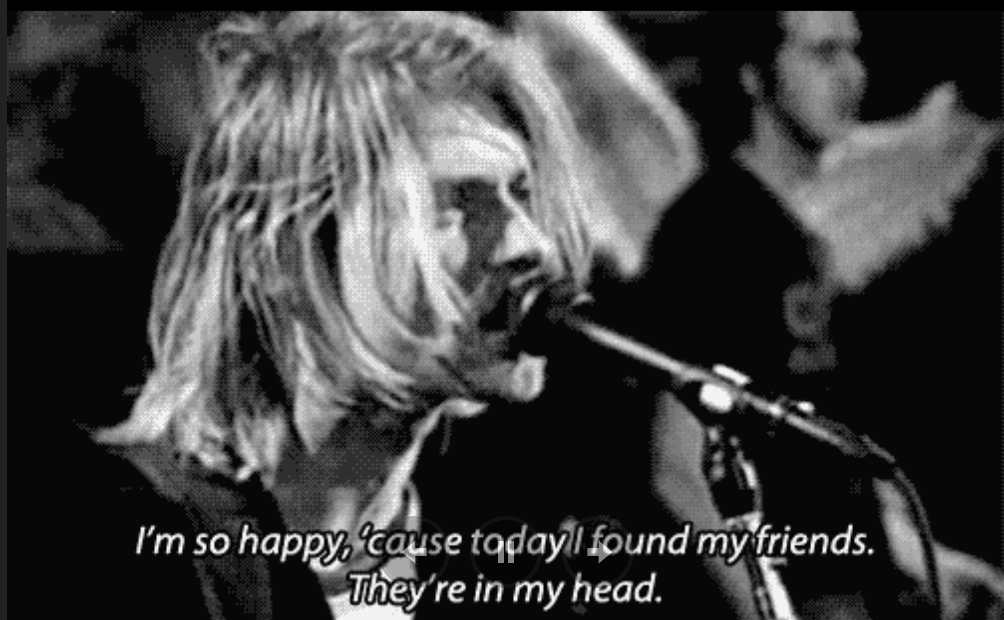
The course is entitled “Drain You. Otherness and Alienation in 20th century English Literature”. It focuses on depictions of subjectivity in relation to the Other and alienation in some key works of English literature spanning the period between the two world wars. Starting with Modernist landmarks, both in poetry (selections from Eliot, Yeats, Auden) and in fiction (J. Joyce, "The Dead"; V. Woolf, "Mrs Dalloway"), the course then explores alienation and threat in dystopia (G. Orwell, "1984"), before moving on to the bleak urban alienation seen from a woman's perspective (J. Rhys, "Good Morning, Midnight"), and subsequently to the macabre irony of M. Spark ("Memento Mori") and the stark dissection by G. Greene ("Brighton Rock"). The course concludes with a look at the post-war period, featuring poetic selections from P. Larkin and "Waiting for Godot" by S. Beckett.

Works:
T. Eliot, W.B. Yeats, W.H. Auden (selections)
J. Joyce, “The Dead”
V. Woolf, _Mrs Dalloway_
G. Orwell, _1984_
J. Rhys, _Good Morning, Midnight_
M. Spark, _Memento Mori_
G. Greene,_Brighton Rock_
P. Larkin (selections)
S. Beckett, _Waiting for Godot_

Catégorie A.A. 2024 - 2025 / Corsi di laurea / LINGUE, LETTERATURE E MEDIAZIONE CULTURALE

The course is entitled "Less Than. The Human, Inhuman, and Posthuman in Shakespeare".
What it means to be human, and more broadly what the human is, in our period of wars, invasions, and persecutions, is unfortunately a daily problem that challenges our consciences.

What it means to be human, and more broadly what the human is, in our period of wars, invasions, and persecutions, is a problem that often arises. The course aims to analyze this theme in Shakespeare. Violence, and the temptation to resort to it, often constitutes the occasion when Shakespearean characters not only demonstrate their humanity or desire to overcome moral barriers and become inhuman, but also the moment when what it means to be human is defined. Even comedy, as demonstrated by _Twelfth Night_, captures what it means to fall in love with another human being and thus discover one's own humanity. Yet, it also explores, through the persecution of the eccentric Malvolio, how one can become inhuman in mockery. The same applies even more to a problem play like _Measure for Measure_ The inflexible judge Angelo embodies a literal law that knows no mercy, yet in his own flesh he feels the call of desire that he would censor. Hence the shift towards the completely inhuman is easy. In a radical mode, the misanthropy of the protagonist of _Timon of Athens_ embodies a more absolute contempt for the human being, whose serious limitations, however, have been widely demonstrated, almost justifying that hatred. In _The Tempest_, the human passions of revenge and the almost divine one of forgiveness confront each other precisely around what it means to be human. Again, it is a woman, Miranda, who immediately shows the admirable faculty of empathy. Through Caliban, however, and the enchanted landscape of the island, the posthuman also emerges, which goes beyond the traditional categories of the human and its opposite.
The ultimate Shakespearean synthesis of the problem appears in _King Lear_: here madness allows us to paradoxically discover the misery of being human, and where there is simultaneously the loss of all limits and the deliberate embrace of inhumanity, and the establishment of a profoundly human pity in Cordelia.

Through comparison with contemporary sources as well, the course will first analyze the two comedies (_Twelfth Night_ and _Measure for Measure_), then move on to _Timon of Athens_ and _The Tempest_. These works constitute the first 6 CFU (42 hours). The remaining 3 CFU (21 hours), required for those taking the 9 CFU course, will involve a close reading of _King Lear_.


The works will be analysed with respect to the historical and cultural contests of the early modern period, with an emphasis on literary conventions and fashions. The texts will be also seen through their afterlife in contemporary culture (art, classical and pop music, cinema, tv, etc.).

If needed, further changes will be notified during the course.

The literary texts are to be bought; please choose the recommended editions.

ALL critical texts will be available online on the course Moodle.

Catégorie A.A. 2024 - 2025 / Corsi di laurea magistrale / LINGUE E LETTERATURE EUROPEE E AMERICANE

The course is titled "The Quest for Freedom in English Poetry, from Romanticism to Modernism". It focuses on the genre of poetry, seen through a selection of masterpieces belonging to this period. The fundamental theme is the search for freedom in all its meanings: the search for the spirit in the Romantics (Wordsworth, Byron, Shelley, Keats), the search for identity and dialogue in Browning and Tennyson, and the search for free meaning in T.S. Eliot. Through close reading of the texts, placed in their historical and cultural context, the course will outline the cultural and literary changes that these works reflect, offering students a solid education in the literature of various periods.

Catégorie A.A. 2023 - 2024 / Corsi di laurea / LINGUE, LETTERATURE E MEDIAZIONE CULTURALE

The course is entitled "I Want to Break Free. Freedom from Marlowe to Milton". The search for freedom runs through many theatrical and poetic works from the time of Shakespeare and Milton: religious freedom, first and foremost, but also freedom in love, in the family, and in the State. Against real or perceived oppression, the characters in this course seek freedom, with movements that offer many suggestive references to the struggles for freedom and self-determination of our days. In the first part of the course (42 hours), a range of theatrical works will be studied that show various aspects of the search for freedom: Christopher Marlowe's _Edward II_, William Shakespeare's _Julius Caesar_, John Marston's _The Malcontent_,John Ford's _'Tis a Pity She's a Whore_. In the second part (21 hours), the course will analyze John Milton's _Paradise Lost_.

Catégorie A.A. 2023 - 2024 / Corsi di laurea magistrale / LINGUE E LETTERATURE EUROPEE E AMERICANE
The course is divided into two halves: the first half will be taught by Beatrice Righetti (on _Dr Faustus_ by Christopher Marlowe), the second one by Rocco Coronato (on _The Rime of the Ancient Mariner_ by S.T. Coleridge). The two canonical texts will be used to acquaint students with the major principles of textual complexity. Different critical approaches to the texts will be investigated; their didactic potential will be explored in relation to online classes, the pros and cons of different approaches to teaching literature, etc.
This course will be based on lectures, in which the professors tackle the major critical and teaching questions implied by the two texts, and an ongoing seminarial approach, where these topics will be actively discussed with students.

Catégorie A.A. 2023 - 2024 / Corsi di laurea magistrale / LINGUE MODERNE PER LA COMUNICAZIONE E LA COOPERAZIONE INTERNAZIONALE

Il corso si intitola "Delirium. Anxiety, Folly, and the Double in English Fiction". Si concentra sul genere della narrativa, visto mediante cinque capolavori distribuiti dal tardo Seicento a inizio Novecento. In questi testi un tema fondamentale è la anxiety, svelata spesso grazie all’esperienza del delirio in diverse declinazione caratteristiche della loro rispettiva epoca. Studieremo così la paura del credente puritano di non essere salvato, immerso in un mondo nemico della fede, e sottoposto a un pellegrinaggio spirituale e simbolico che, con straordinario realismo psicologico, lo sottopone alle tentazioni mondane fino a pervenire alla consapevolezza (Bunyan, _The Pilgrim’s Progress_, 1678); la satira swiftiana dell’entusiasmo religioso e della follia in _A Tale of a Tub_ (1704), che deridendo le deliranti teorie dei dissidenti religiosi inscena una critica della follia che si annida anche dentro la ragione; il genere gotico che a partire dal Settecento gioca con le sensazioni inconfessabili collegate allo horror per esplorare in realtà tematiche occulte e pericolose come la sessualità e la fragilità, soprattutto di una donna, visto mediante la geniale interpretazione velatamente parodica che ne offre Austen (_Northanger Abbey_, 1817); il tema del doppio e della scissione della mente che affonda nel delirio, dove il tema religioso della salvezza si coniuga con quello della follia, grazie alle rivoluzionarie _Private Memoirs and Confessions of a Justified Sinner_ dello scozzese Hogg (1824); infine, la scissione dentro la mente moderna che si manifesta mediante la presenza di un doppio che, salito come clandestino sulla nave, offre al suo capitano un continuo riflesso in _The Secret Sharer_ di Conrad (1910). Mediante la lettura ravvicinata dei testi, inseriti nel loro contesto storico-culturale, il corso spiegherà alcuni principi di narrativa e delineerà i cambiamenti culturali e letterari a cui queste opere rimandano, offrendo a studenti/esse una solida formazione relativa alla letteratura dei vari periodi.

Catégorie A.A. 2022 - 2023 / Corsi di laurea / LINGUE, LETTERATURE E MEDIAZIONE CULTURALE

The Master’s degree in English Studies offers an advanced study programme focusing on
English language, literature and culture for students wishing to acquire
both state-of-the-art knowledge and professional skills in the field. It offers
a unique chance to receive a high-quality education that actively responds
to the vibrant challenges of the marketplace, and plays on a European
scale in terms of advanced professional specialisation in the international
lingua franca. Its English-medium courses make it fully accessible for
international students.

Catégorie A.A. 2022 - 2023 / Corsi di laurea magistrale / LINGUE E LETTERATURE EUROPEE E AMERICANE

Il corso si intitola: "Ecstasy in Early Modern Poetry".

Si concentra sull'estasi come stato mentale di alterazione, fenomeno psicologico straordinario rispetto alla normalità, tanto nella poesia amorosa secolare quanto in quella religiosa e devozionale. Il corso studierà lo stile poetico dell'estasi come momento improvviso di rivelazione della mente e dell'anima, mediante un lungo excursus che da Wyatt, Surrey, Sidney e Spenser si concentra poi su Shakespeare, Donne e i poeti metafisici.

Le opere saranno analizzate rispetto ai contesti storici e culturali della produzione letteraria del periodo "early modern", con particolare attenzione per le convenzioni e le mode letterarie. I testi saranno anche illustrati alla luce della loro afterlife nella cultura contemporanea (musica classica e pop, cinema, televisione, arte, etc.).

* * *

The tile of the course is "Ecstasy in Early Modern Poetry".
It will focus on ecstasy as an altered mental state, a psychological phenomenon in opposition to normality, both in secular love poetry and in religious poetry. The course will study the poetical style of ecstasy as a sudden revelation of the mind and the soul, through a detailed detour from Wyatt, Surrey, Sidney and Spenser onwards to Shakespeare, Donne and the Metaphysical poets.

The works will be analysed with respect to the historical and cultural contests of the early modern period, with an emphasis on literary conventions and fashions. The texts will be also seen through their afterlife in contemporary culture (art, classical and pop music, cinema, tv, etc.).

Catégorie A.A. 2022 - 2023 / Corsi di laurea magistrale / LINGUE E LETTERATURE EUROPEE E AMERICANE
Il corso si concentrerà sulle questioni traduttologiche mediante uno studio ravvicinato e incrociato dell'esempio fornito dai _Sonnets_ di W. Shakespeare (1609). Dopo un'introduzione ai Translation Studies, visti rispettivamente dal versante linguistico e da quello letterario, il corso, ripartito fra due docenti, una di Linguistica Inglese e uno di Letteratura Inglese, prenderà in esame alcuni esempi in varie lingue di traduzione dei _Sonnets_ per rimarcarne i problemi principali, le mode nella traduzione, i parametri di fedeltà e originalità della resa, le questioni di stile. La parte conclusiva del corso prevederà il lavoro individuale/in gruppo di studenti/esse che esamineranno, in raggruppamenti dettati dalla medesima lingua di arrivo, alcuni altri esempi di traduzioni dei _Sonnets_.

Catégorie A.A. 2022 - 2023 / Corsi di laurea magistrale / LINGUE E LETTERATURE EUROPEE E AMERICANE
Il tema del corso, intitolato "Travelling Texts in the Environment During a Crazy Pandemic, 17th-19th centuries", è l’emergere fra Sei e Ottocento di opere che vengono concepiti come viaggi e che del viaggio riprendono la dinamica del cambiamento continuo delle forme e delle idee. Si tratta inoltre di testi situati in un ambiente naturale, vero o immaginario, dove i protagonisti si rifugiano in isolamento dalla diffusione pandemica di una malattia del corpo o metaforicamente della psiche, spesso venata di quella follia che mina la nascente visione monolitica e rispettabile dell’Inghilterra di cui offrono decostruzioni geniali.

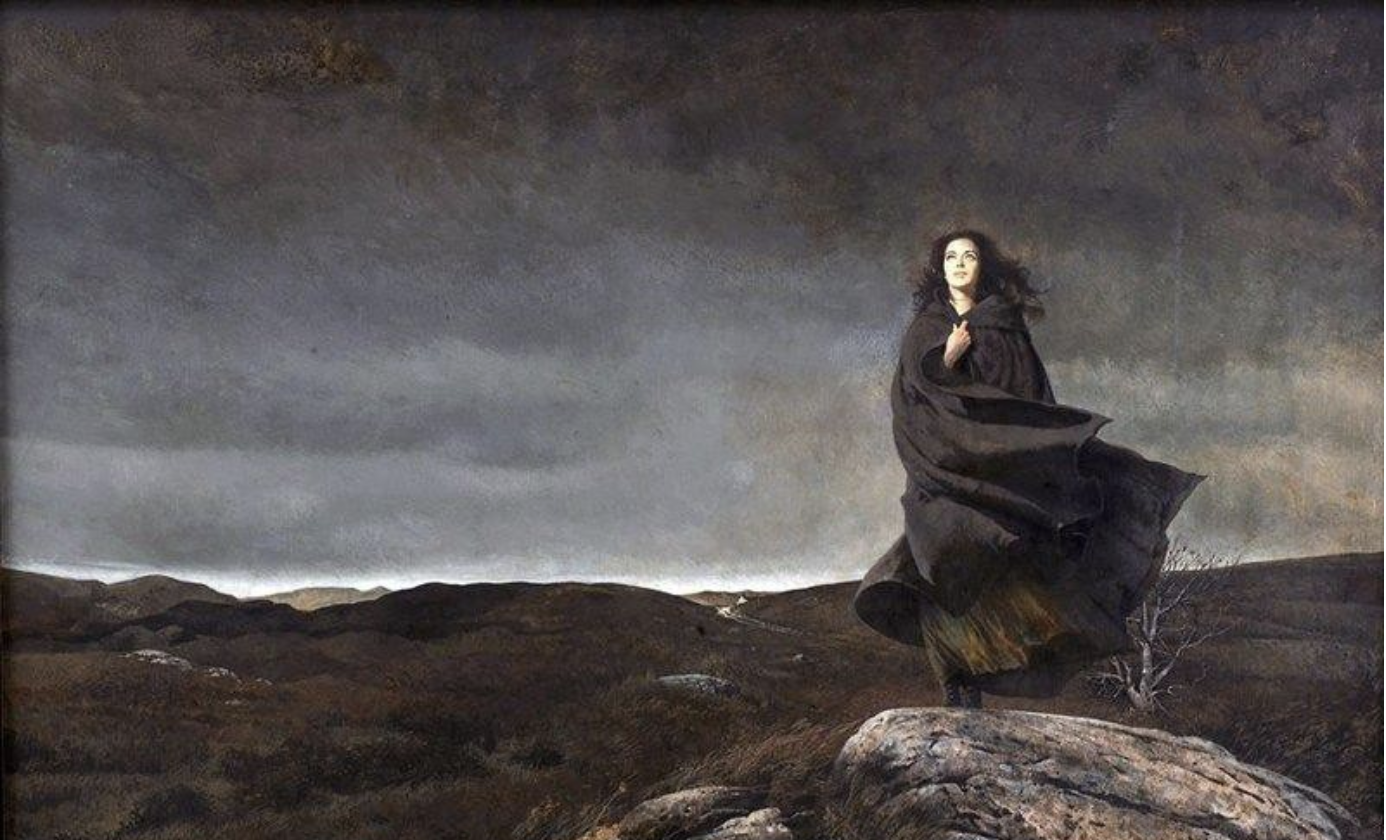
L’ambiente è spesso visto come il luogo di una pastorale introversa della fuga dalla civiltà urbana, la stessa attraversata dalla peste del 1665 descritta da Defoe (_A Journal of the Plague Year_, 1722) e da cui fugge la protagonista del primo romanzo inglese di fantascienza, _The Blazing World_ (1666) di Margaret Cavendish. Dalla civiltà, più volte abbandonata nei suoi viaggi per il globo, si ritrae schifato il protagonista dei _Gulliver’s Travels_ di Swift (1726), ritiratosi in campagna dopo l’incontro nel suo ultimo viaggio con i saggi ed equini Houyhnhnms. Nell’ambiente sterminato dell’Oriente si situano i viaggi del principe Rasselas di Johnson (1759), malato del morbo di cercare viaggiando una ragione per la sua esistenza che affligge molti personaggi dei racconti filosofici e orientali settecenteschi. Contro le convenzioni temporali e narrative della civiltà settecentesca agisce nella sua country house separata dalla città il Tristram Shandy di Sterne (1759), affetto dalla English malady settecentesca, la malinconia, e intento in un viaggio intrauterino nel secolo degli spostamenti e del Grand Tour. Dalla natura proviene infine l’ispirazione per i ritratti dei reietti e degli outsiders nelle romantiche _Lyrical Ballads_ di Wordsworth e Coleridge (1798), spesso risultato dagli sprazzi estatici conseguenti alla peregrinazioni e vagabondaggi dello spirito romantico. Storie di nomadismo, fisico e mentale, e di trovatelli provenienti da un indistinto Oriente coloniale si svolgono infine nella brughiera dello Yorkshire che offre l’ispirazione tardoromantica e vittoriana per l’amore disperato e quasi soprannaturale fra Cathy e Heatchcliff in _Wuthering Heights_ (1847) di Emily Brontë.

Spaziando fra più periodi e più generi, il corso intende mostrare come questi capolavori, viaggi nell’argomento e nella forma, riprendano gli elementi dell’ambiente in contrapposizione all’ordinato e rispettabile contesto urbano della malata civiltà borghese.

* * *

The theme of the course ("Travelling Texts in the Environment During a Crazy Pandemic, 17th-19th centuries") is the emergence between the 17th and the 18th centuries of masterpieces that in their inception evoke travelling and often draw from travelling the dynamics of a perpetual change of forms and ideas. Furthermore, these texts are often couched in a natural environment, be it real of fictional, where the protagonists take shelter in a sort of lockdown from the pandemic spread of a physical or metaphorically psychological disease, often tinged with the folly that undermines the dawning monolithic, respectable vision of England which they admirably deconstruct.

The environment is thus the site of an introvert pastoral away from urban civilization, the same affected by the 1665 plague described by Defoe (_A Journal of the Plague Year_, 1722) and from which basically also escapes the female protagonist of Margaret Cavendish’s _The Blazing World_ (1666). The protagonist of Swift’s _Gulliver’s Travels_ (1726) eschews civilization first thanks to his many travels round the globe and then finally by secluding himself in the countryside after having met the equine, rational Houyhnhnms. The endless landscape of the Orient sees the profitless travels of Johnson’s Prince Rasselas (1759), plagued by that disease of travelling in search for a reason to live which afflicts many characters of 18th-century philosophical and Oriental tales. Well secluded into his country house, the protagonist of Sterne’s _Tristram Shandy_ (1759) dubiously travels in utero and in his mind during the age of travels and of the Grand Tour. Nature grants inspiration for the portrayal of outcasts and outsiders in Wordsworth’s and Coleridge _Lyrical Ballads_ (1798), often deriving from bouts of Romantic perambulation and roaming. Entwined tales of physical and mental nomadism and of foundlings hailing from the far colonial East take place in the wild moors of Yorkshire that lend late Romantic and Victorian inspiration to the desperate, nearly supernatural love between Cathy and Heatcliff in Emily Brontë’s _Wuthering Heights_ (1847).

Encompassing different periods and genres, the course aims to show how these masterpieces, truly travelling texts in their themes and forms, draw on the environment in opposition to the ordered, respectable urban context of sickening bourgeois civilization.


Catégorie A.A. 2021 - 2022 / Corsi di laurea / LINGUE, LETTERATURE E MEDIAZIONE CULTURALE